%201.png)
Case Study: Talgoxen 1-3 Energy Optimization
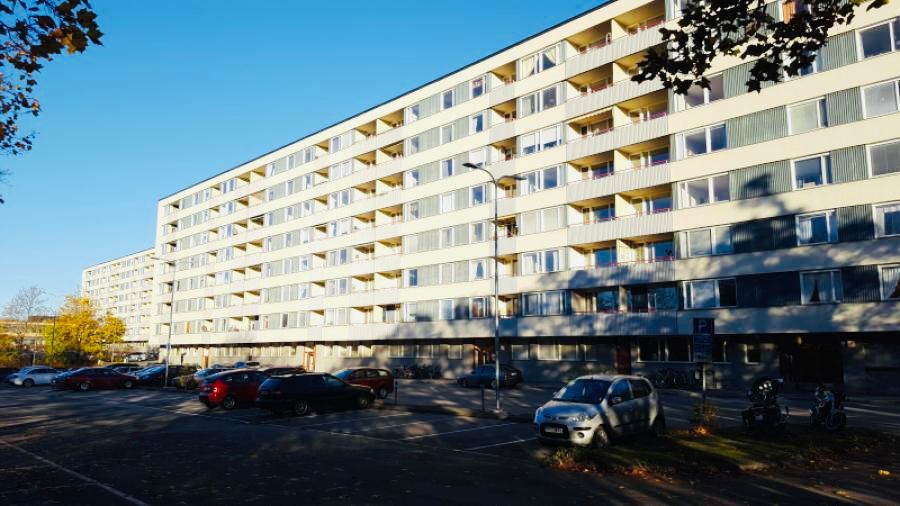
Talgoxen 1- 3 is a residential complex with 175 apartments that had major problems with heating-system

Project background
Talgoxen 1–3 is a large residential complex with 175 apartments that faced serious heating issues, uneven temperature distribution, and the risk of expensive system overhauls. The goal of the project was to restore efficient heat transfer, stabilize temperatures, reduce energy consumption, and extend the system’s operational life – all without replacing major hardware.
The Challenge
The buildings showed extreme discrepancies in room temperatures, ranging from 12°C to 28°C. The heating system was underperforming due to internal scaling and biofilm buildup, which impaired flow and thermal efficiency. Two costly options were considered: chemical cleaning (estimated at 4.5 million SEK) or a complete replacement of radiators and thermostats (estimated at 10 million SEK).
Solution
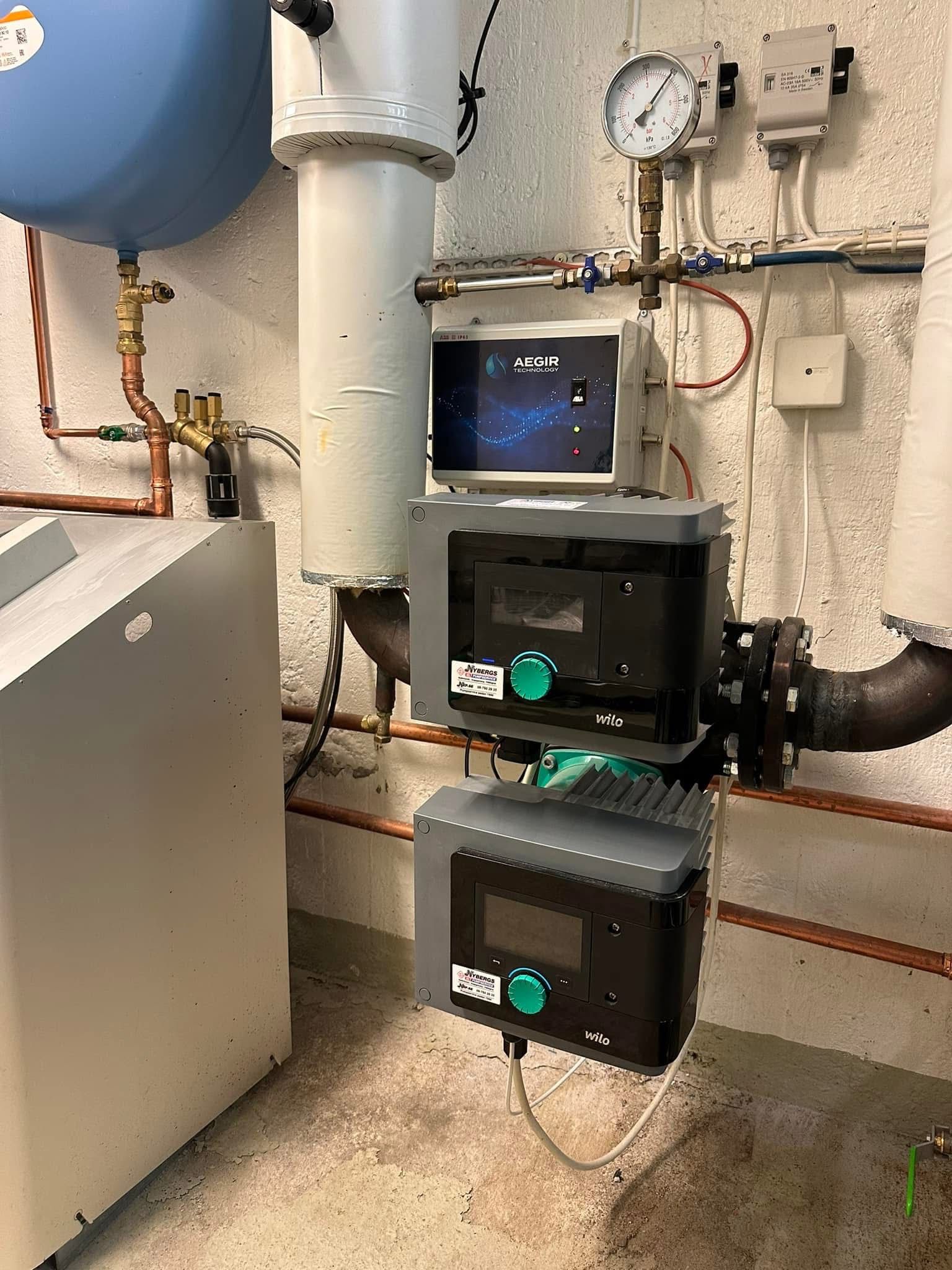
In late 2023, AEGIR Impulse Pro was installed on the closed-loop heating system, and a smaller unit was connected to the domestic hot water circulation (VVC) to reduce Legionella risk and improve hot water stability.
The AEGIR system uses pulsed electromagnetic signals to generate nanobubbles by leveraging the natural gases already present in the system water – primarily dissolved oxygen (O2) and carbon dioxide (CO2). These nanobubbles break down biofilm, remove corrosion residues, and restore flow without chemical agents. The system also enhances heat transfer by creating microturbulence around heat exchange surfaces.
Results
- Talgoxen 3 (without degasser): 11.5% energy saving
- Talgoxen 1 (with degasser): 1-3% energy savings
- Significantly more magnetite and sludge were removed in systems without an exhaust
- Smoother temperatures and improved flow without changing thermostats
- Investment: approx. SEK 360 000
- Estimated long-term savings: 7-8 MSEK
Technical
A critical finding was the impact of dissolved gases on nanobubble generation. The system without a degasser (Talyoxen 3) retained higher concentrations of O2 and CO2, which dramatically improved nanobubble formation and, in turn, cleaning and thermal transfer efficiency. This case confirms that degassing, while sometimes recommended in closed-loop systems, may reduce the effectiveness of impulse-driven nanobubble solutions.
The AEGIR Impulse system’s ability to operate without chemicals or mechanical changes made it a cost-effective and non-invasive solution for a complex problem – restoring performance through physics, not replacement.
Project Team
Steven Sabok Roh, Anton Johansson, Douglas Burman
.jpeg)
.jpeg)
.jpeg)