%201.png)
Field Study - Brf Hårstabacke NetZero Case Study
Fix recurrent blockages in bathroom lines and reduce the risk of water damage...

.jpeg)
Field Study Brf Hårstabacke NetZero Case Study
Project introduction
Fix recurring blockages in bathroom lines and reduce the risk of water damage.
Trouble
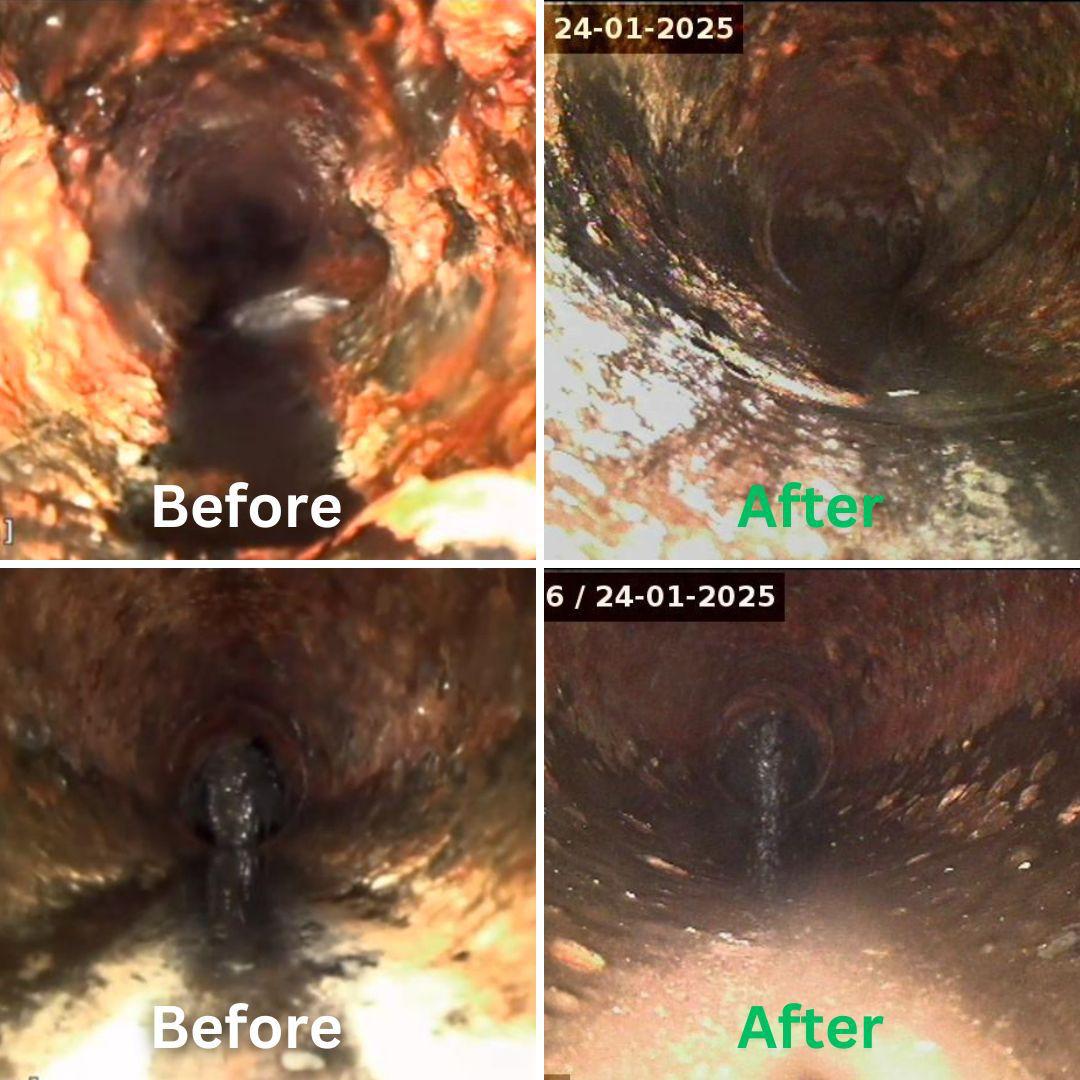
The property had recurring problems with stops in bathroom pipes, which led to water damage in parts of the building. Pipe inspections showed heavy coating of lime and rust.
Solution
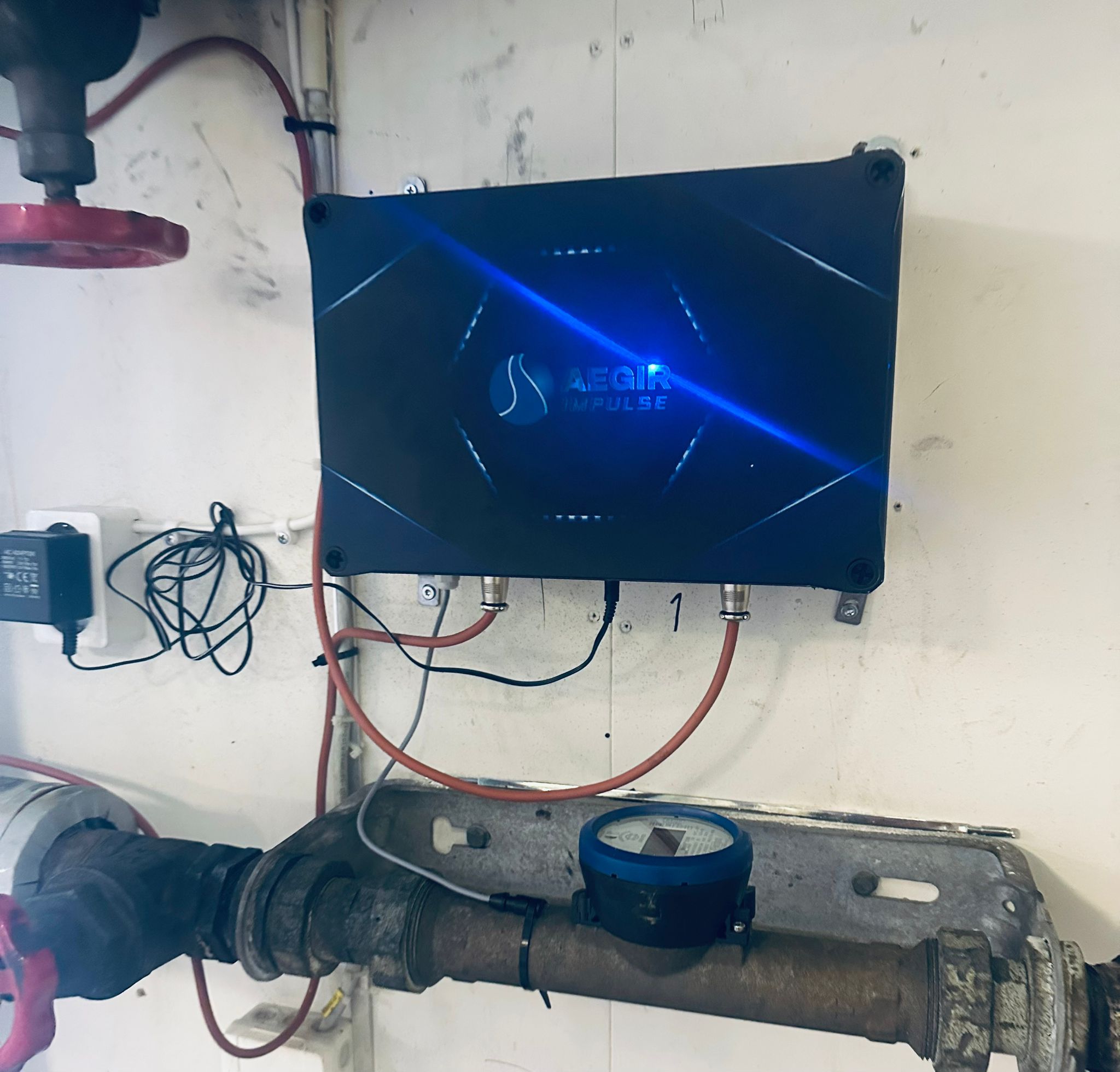
In October 2023, AEGIR Impulse Pro was installed on the incoming cold water pipeline, along with a smaller unit on the hot water circulation. A Pro model was later installed on the radiator system as well.
Results
- After 12 months, the radiator system was completely free of coatings.
- Lime and deposits had dissolved, which was confirmed when a radiator was dismantled.
- Grease and biofilm in wastewater pipes disappeared after flushing.
- Energy consumption decreased by about 15 percent in February 2024.
- No visible limescale in showers or kettles, indicating improved water quality.
- Savings of approximately SEK 16 million compared to a planned renovation of the piping system.
- Investment: 340 000 SEK.
Update (July 2025)
This case study is based on existing data and observations from the installation at Brf Hårstabacke. The goal was to optimize energy use, improve heat transfer, reduce costs, and prevent biofilms and coatings in both tap water and radiator systems.
During winter measurements, a maximum energy saving of about 15 percent was observed before activating the exhaust. After the exhaust started, energy use gradually increased towards previous levels. This indicates that the exhaust affects the dynamics of the system.
Nanobubble formation appears to be more efficient before degassing, when dissolved CO₂ and O₂ levels are higher. The system likely used naturally occurring gases to enhance heat transfer via nanobubbles.
This insight will guide future optimization of equipment and operating procedures.
Project Team
Anton Johansson , Steven Sabok Roh and Jay Hachimi
.jpeg)